
Shilajit comes from mountainous regions of the world, particularly the Himalayas and other high-altitude areas of Central and South Asia. It is a dark, resin-like natural substance that develops over long periods through the transformation and decomposition of organic plant material and other natural matter within rocky environments.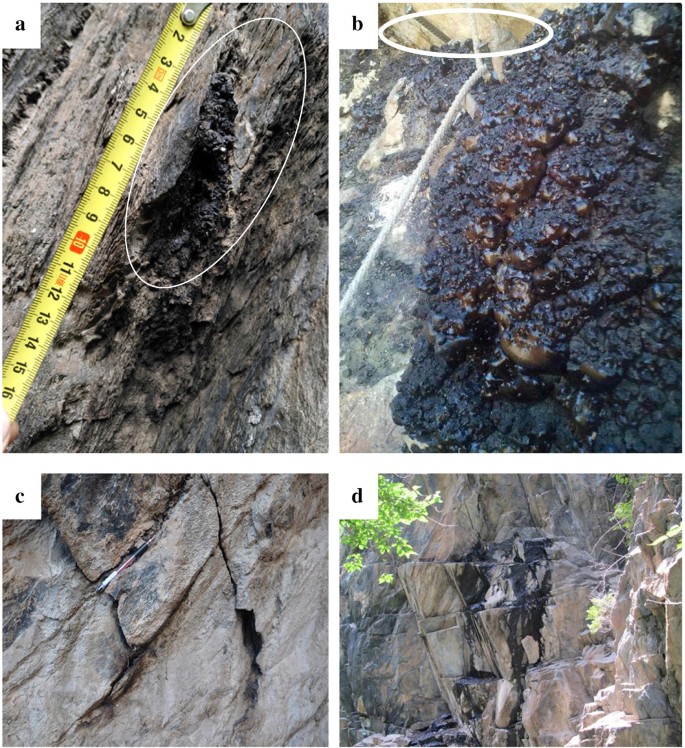
Because of its traditional association with the Himalayas, Shilajit is often called Himalayan Shilajit. However, Shilajit is not found exclusively in one mountain range.
So, where exactly does Shilajit come from, how is it formed, and why is Himalayan Shilajit so well known?
Let's take a simple look.
Where Is Shilajit Found?
Shilajit is traditionally associated with high-altitude mountainous regions.
It has been reported in areas including:
-
The Himalayan mountain range
-
Tibet
-
India
-
Nepal
-
Bhutan
-
Pakistan
-
Afghanistan
-
Other mountainous regions of Central Asia
The exact composition and characteristics of Shilajit can vary depending on its geographical origin, surrounding environment, organic material, minerals, and processing methods.
This is one reason different Shilajit products may not be identical.
Does Shilajit Come Only From the Himalayas?
No.
The Himalayas are one of the best-known sources associated with traditional Shilajit, but Shilajit-like substances occur in other mountainous regions as well.
The word “Himalayan Shilajit” generally refers to Shilajit sourced from the Himalayan region.
However, simply calling a product “Himalayan” does not automatically prove that it is pure, authentic, or safe.
When buying Shilajit, consumers should also consider:
-
Source information
-
Purification
-
Laboratory testing
-
Ingredients
-
Manufacturing standards
-
Product traceability
How Is Shilajit Formed?
One of the most interesting things about Shilajit is that it is not simply a mineral pulled out of the ground.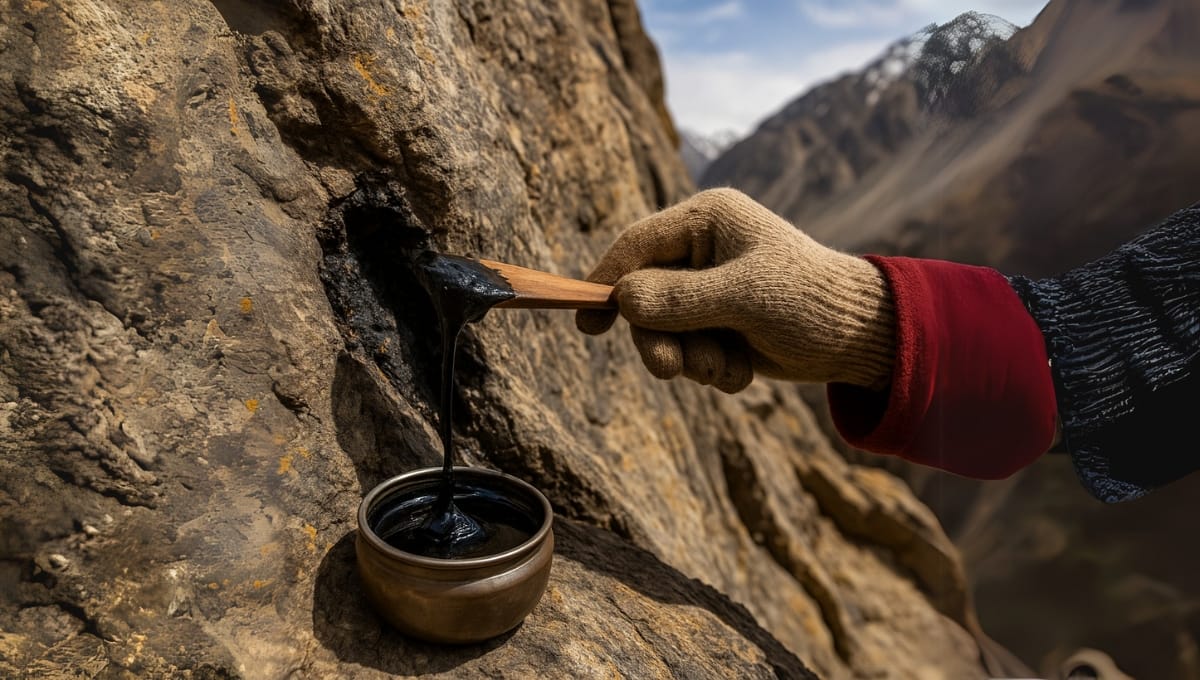
It is a complex natural substance formed over a very long period.
The exact formation process is complex and has been studied from different scientific perspectives.
In simple terms, Shilajit is associated with the gradual transformation of organic plant material and other biological matter in mountainous environments.
Over long periods, natural geological and biological processes transform this material.
The resulting substance contains a complex mixture of organic compounds, humic substances, minerals, and other components.
One of the best-known components associated with Shilajit is fulvic acid.
Why Is Shilajit Found in Mountains?

Shilajit is strongly associated with mountainous and high-altitude environments because of the combination of geological, environmental, and biological conditions found there.
Mountain rocks can contain layers and cracks where organic material becomes trapped and gradually transforms over time.
Temperature changes, geological pressure, moisture, microorganisms, and the surrounding mineral environment may all play roles in the long-term formation and composition of Shilajit.
This is also why Shilajit from different geographical regions can have different characteristics.
How Is Shilajit Collected?
Traditionally, naturally occurring Shilajit is collected from rocky mountainous areas.
It may appear as a dark, sticky substance emerging from cracks or crevices in rocks.
Traditionally, collectors locate naturally occurring material and carefully remove it from the surrounding rock.
However, raw Shilajit is not necessarily ready to consume.
Raw material may contain unwanted substances, including dirt, microorganisms, and potentially harmful contaminants.
That is why purification and appropriate quality testing are important before Shilajit is sold as a consumer supplement.
What Does Raw Shilajit Look Like?
Raw Shilajit can appear as a dark, sticky or resin-like material.
Its appearance can vary depending on its source and environmental conditions.
It may range from:
-
Dark brown
-
Brownish-black
-
Black
The texture can also change depending on temperature.
In warmer conditions, Shilajit resin may become softer and more sticky, while cooler temperatures can make it firmer.
However, appearance alone cannot prove that Shilajit is pure or authentic.
A dark colour or sticky texture is not a substitute for proper quality testing.
Why Is Himalayan Shilajit So Popular?
The Himalayas have a long history of traditional medicine and wellness practices.
Shilajit has been used in Ayurvedic traditions for centuries, where it has been associated with vitality, strength, energy, and general wellness.
This traditional history, combined with the unique environment of the Himalayan mountains, has contributed to the popularity of Himalayan Shilajit.
Today, Himalayan Shilajit is sold around the world in forms such as:
-
Shilajit resin
-
Shilajit capsules
-
Shilajit tablets
-
Shilajit-based supplements
Is Himalayan Shilajit Better Than Shilajit From Other Regions?
Not necessarily.
A product's geographical origin is only one factor to consider.
The quality of Shilajit can also depend on:
Source → Collection → Purification → Processing → Testing → Storage
A well-purified and properly tested product from a reputable manufacturer may be preferable to an untested product simply because it carries a particular geographical label.
So don't choose Shilajit based on the word “Himalayan” alone.
Look at the complete quality story.
Why Does Shilajit Contain Minerals?
Shilajit develops within a complex geological environment, so naturally occurring minerals can become part of its composition.
The exact mineral profile can vary according to the geographical source and processing.
This is one reason laboratory analysis is useful when evaluating a Shilajit product.
Instead of relying only on marketing claims, testing can provide information about what is actually present in a particular batch.
What Is Fulvic Acid in Shilajit?
Fulvic acid is one of the best-known compounds associated with Shilajit.
It belongs to a group of naturally occurring organic substances known as humic substances.
Fulvic acid has attracted scientific interest because of its chemical and biological properties.
However, the amount and composition of fulvic substances can vary between Shilajit products.
Therefore, a claim such as “high fulvic acid” should ideally be supported by appropriate product testing rather than being treated as a guarantee of quality.
Is Shilajit a Plant or a Mineral?
Shilajit is not simply a plant and it is not simply a mineral.
It is a complex natural substance containing organic and inorganic components.
Its formation is associated with the long-term transformation of organic matter within a geological environment.
That's why describing Shilajit as simply “a Himalayan mineral” doesn't tell the complete story.
Why Does Shilajit Quality Vary?
Shilajit is a natural substance, so its composition can vary.
Factors that can influence the final product include:
-
Geographical origin
-
Geological environment
-
Organic material
-
Collection methods
-
Purification process
-
Processing
-
Storage
-
Testing standards
This is why two products both labelled “Shilajit” may not necessarily have identical characteristics.
For consumers, this makes purification, testing, and transparent manufacturing especially important.
How Is Shilajit Prepared for Consumption?
Raw Shilajit collected from mountainous environments typically requires processing before it can be sold as a consumer supplement.
A manufacturer may use purification and filtration processes to remove unwanted materials.
The exact process varies between manufacturers.
A responsible Shilajit brand should provide appropriate information about its product and quality practices.
For consumers, the key point is simple:
Raw Shilajit and purified Shilajit should not be treated as the same thing.
Where Does Teora Wellness Shilajit Come From?
Teora Wellness focuses on providing Shilajit products for customers looking to include Shilajit in their daily wellness routine.
When choosing any Shilajit product, including products from Teora Wellness, consumers should look at the product's source, purification, testing, ingredients, serving instructions, and manufacturing information.
You can learn more about Teora Wellness and explore its Shilajit products through the official website:
Teora Wellness — Official Website
Frequently Asked Questions
Where does Shilajit naturally come from?
Shilajit is naturally associated with mountainous regions, particularly the Himalayas and other parts of Central and South Asia.
Is Shilajit found in India?
Yes. Shilajit has traditionally been associated with Himalayan and other mountainous regions of India.
Does Shilajit come from Nepal?
Yes. Himalayan regions of Nepal are traditionally associated with naturally occurring Shilajit.
Does Shilajit come only from the Himalayas?
No. Shilajit-like substances have been reported in several mountainous regions across Central and South Asia. The Himalayas are simply one of the best-known traditional sources.
How is Shilajit formed?
Shilajit is associated with the long-term transformation of organic plant and biological material within mountainous geological environments. Its exact formation is complex and involves biological and geological processes.
Is Shilajit found inside rocks?
Shilajit can occur in cracks and crevices of rocks in mountainous areas and may naturally emerge from rocky surfaces.
Is raw Shilajit safe to consume?
Raw Shilajit should not automatically be considered safe for consumption. It may contain unwanted contaminants, so proper purification and quality testing are important.
Why is Himalayan Shilajit popular?
Himalayan Shilajit is popular because of its long association with Ayurvedic traditions and the Himalayan region. However, geographical origin alone does not guarantee purity or quality.
Is all Himalayan Shilajit the same?
No. Shilajit can vary depending on its source, composition, collection, purification, processing, and storage.
Final Thoughts
Shilajit comes from mountainous regions, particularly the Himalayas and other areas of Central and South Asia. It develops naturally over long periods through the transformation of organic material in a complex geological environment.
The Himalayas are one of the most famous traditional sources of Shilajit, but the word “Himalayan” alone does not guarantee that a product is pure or safe.
If you're considering Shilajit, look beyond the location on the label. Source, purification, testing, manufacturing, and transparency all matter.
And if you want to learn more about Shilajit products from Teora Wellness, visit: